
Home Office or Living Room
A desk, TV, or reading area may need a receptacle closer to where equipment actually sits. Share what will connect there, especially if several devices will run together.
Power where you need it
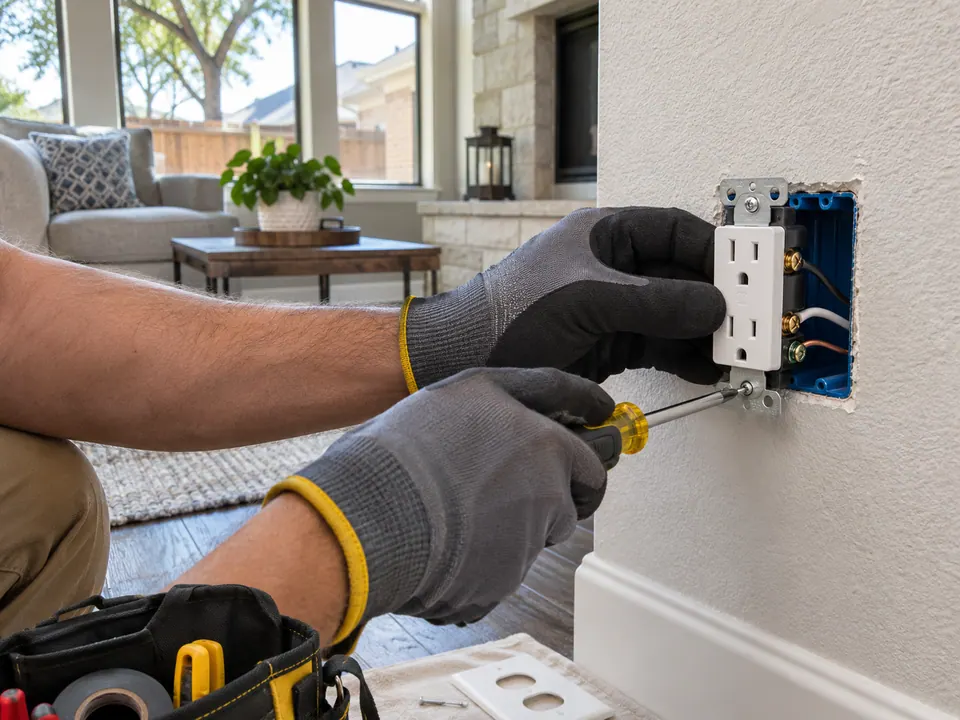
World Class Electric, LLC helps homeowners and businesses in Arlington add, move, or update electrical outlets. A new outlet beside a desk, behind a wall-mounted TV, or near a patio can make the space easier to use without relying on a permanent extension cord. The right location and receptacle depend on the devices you will plug in, the existing circuit, and the conditions around it. Call with the room, proposed location, and intended use.
A useful addition
An electrician can add a receptacle where it serves everyday use, but a nearby outlet is not automatically a suitable source. The existing circuit must be identified and checked for the devices you intend to use. Wall construction and access determine how the cable and electrical box can reach the new position.
Plan the placement around furniture, appliances, and how cords will run through the space. A receptacle that is easy to reach and suited to its location is more useful than another one hidden behind the wrong cabinet or placed where a cord crosses a walkway.
Where people ask for power
The devices and surroundings change what kind of receptacle and wiring may be appropriate.
A desk, TV, or reading area may need a receptacle closer to where equipment actually sits. Share what will connect there, especially if several devices will run together.
Countertop and appliance locations need careful attention to circuit capacity, outlet placement, and required protection. A new heavy-load appliance can be a different project from adding an ordinary outlet.
Workbench access and tool placement matter. The electrician needs to know whether the outlet will serve ordinary portable tools or equipment with a specified power requirement.
Outdoor receptacles need an appropriate location, enclosure, cover, and shock protection for exposure to weather and moisture.
Select the right device
Device features are useful only when the supply and location are suitable. The electrician should check the circuit before choosing the final receptacle.
A standard receptacle serves everyday devices. Tamper-resistant designs add shutters that help limit access to the contact openings; the installation still needs a suitable box and circuit.
Built-in charging ports can reduce adapter clutter at a desk or bedside. Consider whether the receptacle's port configuration and ordinary plug spaces fit how the area will be used.
A patio or garage installation may need weather-resistant equipment and ground-fault protection. The specific device and cover depend on exposure and the applicable requirements.
A different plug face does not give an appliance more power. A range, dryer, or large tool may need a circuit reserved for that equipment with wiring and protection selected from its specifications.
Before installation
The visible receptacle is only the final point of a circuit. Its source, condition, and route determine the work.
An electrician identifies which breaker serves the area and what else shares the circuit. Adding a convenient outlet does not increase the circuit's available capacity.
Older two-slot outlets should not be treated as grounded just because a three-slot face is installed. The actual wiring and available protection need assessment before an upgrade is chosen.
Studs, tile, masonry, cabinetry, and finished walls can affect the cable route and the location of the box. Discuss any expected access openings or finish work as part of the scope.
A dead, hot, loose, or discolored device is a fault to diagnose before adding another point on its circuit. Repairing an existing outlet starts with the cause of that failure, not the placement of a new one.
How the job starts
A clear installation plan covers the device, source circuit, and finished location.
Tell us which room or exterior area needs power, how many outlets you want, and what devices will use them.
An electrician checks the existing circuit, route, grounding, and protection before proposing the outlet and wiring.
Review device type, placement, access, testing, any applicable approval, and the proposed price before work begins.
Service areas
Call about adding or moving outlets at your home or business in Arlington or another community we serve.
View all service areas →Helpful answers
These details help you choose a practical location and understand the work involved.
Many locations are possible, but the route to suitable wiring, wall construction, required spacing and protection, and what will use the outlet all affect placement. An assessment can identify practical locations before the wall is opened.
Sometimes. The electrician must identify the circuit and check its condition, protection, and existing loads. Adding another receptacle does not add capacity. Equipment with a larger or specified load may need a separate circuit instead.
If a cord is serving as permanent wiring, a properly located outlet can be the more suitable long-term solution. Extension cords are intended for temporary use and should not be run through walls or under flooring. Choose the outlet location around the equipment rather than leaving a cord across the room.
The electrician can assess a suitable location and wiring route behind or near the TV. The wall construction, existing circuit, and other equipment at the media area affect the plan. Power cords should not simply be run inside a wall.
No. A three-slot receptacle does not create an equipment ground. The existing wiring must be evaluated so the electrician can choose an appropriate grounded or otherwise code-permitted solution for that location.
An outdoor receptacle needs equipment, protection, and a cover suited to its exposure. Ground-fault protection is an important part of outdoor outlet safety. The electrician can choose the device and location after reviewing the wall, weather exposure, and intended use.
The price depends on how many outlets you want, access to a suitable circuit, distance and wall construction, receptacle type, and any required wiring or approval. Give the proposed locations and intended devices so the job can be assessed before a price is provided.
Approval requirements depend on the exact installation and the city's current rules. Ask which permit or inspection, if any, applies to the proposed work and who will coordinate it before installation starts.