
Bathroom Outlets
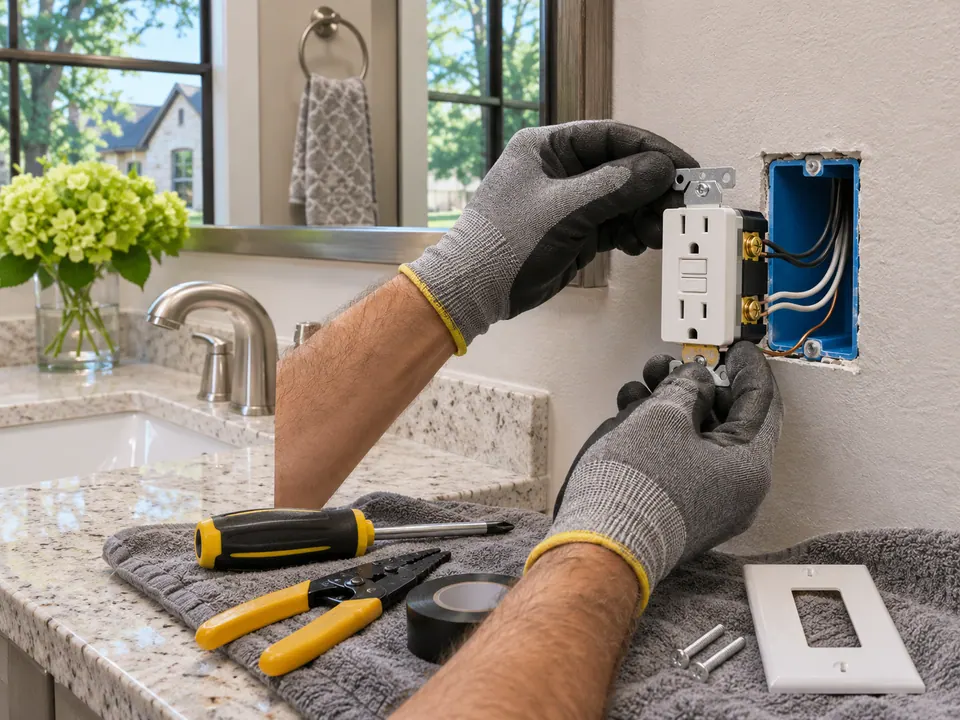
A bathroom receptacle is used near sinks and wet hands. We check its circuit and existing protection before fitting a suitable GFCI receptacle or confirming another protective arrangement.
Protection where electricity and moisture may meet
World Class Electric, LLC helps Arlington homeowners and businesses add or replace ground-fault protection at outlets in kitchens, bathrooms, garages, and outdoor areas. A ground-fault circuit interrupter, or GFCI, cuts power when it detects a fault that could cause a shock. An electrician can check the existing circuit and its protection before selecting and installing the right device. Tell us where the outlet is and whether this is a new location or a replacement.
Start with the existing circuit
Test and reset buttons on a receptacle are one visible clue, but protection can also come from a GFCI device elsewhere on the circuit or a GFCI breaker at the panel. An electrician can check which outlets are protected and how they are connected before adding another device.
The choice depends on the outlet location, the circuit, and the work being done. A new installation may need a suitable box, wiring, and protective device; replacing an existing receptacle calls for a check of its connections and the protection already in place.
Where protection is commonly needed
The location and exposure guide the installation. The existing electrical layout determines the appropriate device and whether other outlets share its protection.
A bathroom receptacle is used near sinks and wet hands. We check its circuit and existing protection before fitting a suitable GFCI receptacle or confirming another protective arrangement.
Countertop appliances, sinks, and laundry equipment bring power close to water. The outlet layout and connected equipment help determine where protection is needed and how it should be installed.
Garage receptacles may serve tools, chargers, and equipment. An electrician checks the circuit and intended load, then selects protection that fits the installation rather than assuming every outlet needs its own button-equipped device.
Outdoor receptacles need protection suited to weather exposure. The installation may also call for a weather-resistant device, an appropriate cover, and a sound box and wiring connection.
A practical distinction
GFCI protection responds to certain current imbalances. It does not create an equipment ground where one is missing. An older two-prong outlet therefore needs an assessment before its replacement type or labeling is chosen.
If an existing GFCI repeatedly trips, will not reset, or leaves downstream outlets without power, the circuit needs outlet fault diagnosis. Replacing the device without identifying the cause may leave the original problem in place.
Add or update a GFCI device when the location or project calls for it. The electrician checks the circuit and protective arrangement.
A dead, hot, damaged, or repeatedly tripping outlet calls for investigation. Stop using a damaged device and describe the symptoms when you call.
Share the written finding so the work can address the specific issue rather than assuming every receptacle needs replacement.
How the work is planned
A sound installation starts with the circuit, not only the receptacle face.
Tell us the room, how the outlet is used, and whether you want a new receptacle or a replacement. Share any inspection note or known wiring concern.
An electrician assesses the box, wiring, grounding condition, and any upstream protection before selecting the device and installation approach.
The selected protection is installed and tested, including any outlets intended to be protected downstream. You can then be shown how its test and reset controls work.
Service areas
Call about an outlet at your home or business in Arlington or another community we serve.
View all service areas →Helpful answers
Understand what protection does and what to tell the electrician about your outlets.
A ground-fault circuit interrupter monitors the current leaving and returning on a circuit. It opens the circuit when it detects a difference that may indicate current is taking an unintended path. It helps reduce shock risk but does not replace safe wiring or proper use of electrical equipment.
Not necessarily. A GFCI receptacle or breaker may protect other outlets on the same circuit when wired for that purpose. An electrician can verify the actual protection and determine what the location and current requirements call for.
There are situations where GFCI protection is used with an ungrounded circuit, but it does not add an equipment ground. The existing wiring, device choice, and required labeling need assessment before a two-prong outlet is changed.
Outdoor exposure affects the device, cover, box, and connections. An electrician can select weather-suitable components and verify that the outlet has appropriate ground-fault protection.
The device may be responding to a fault in equipment or wiring, an upstream power issue, moisture, or a failed GFCI. Repeated resetting will not identify the cause. Describe what was connected and whether other outlets lost power when you call.
Yes, when the circuit is wired and tested for downstream protection. An outlet without its own test and reset buttons may still be protected. The electrician can identify which receptacles are covered after installation.
Not every replacement needs a new cable. A new outlet location, damaged wiring, unsuitable box, or a different protective layout may change the work. An assessment determines the scope before installation.
The price depends on whether an existing receptacle can be replaced, the condition of its box and wiring, the number and location of outlets, and whether a new circuit or weatherproof installation is needed. Share those details when requesting a quote.