
One Outlet Is Dead or Intermittent
A failed receptacle, loose connection, switched outlet, or upstream protective device may be involved. Note whether the failure comes and goes; testing the circuit helps distinguish the cause.
Find the fault before replacing parts
World Class Electric, LLC helps Arlington homeowners and businesses with outlets that stop working, hold plugs loosely, or show signs of damage. A dead receptacle may be the failed part, or it may have lost power because of a GFCI, breaker, connection, or wiring problem elsewhere on the circuit. Call with the affected room and what else has lost power so an electrician can trace the cause before recommending a repair.
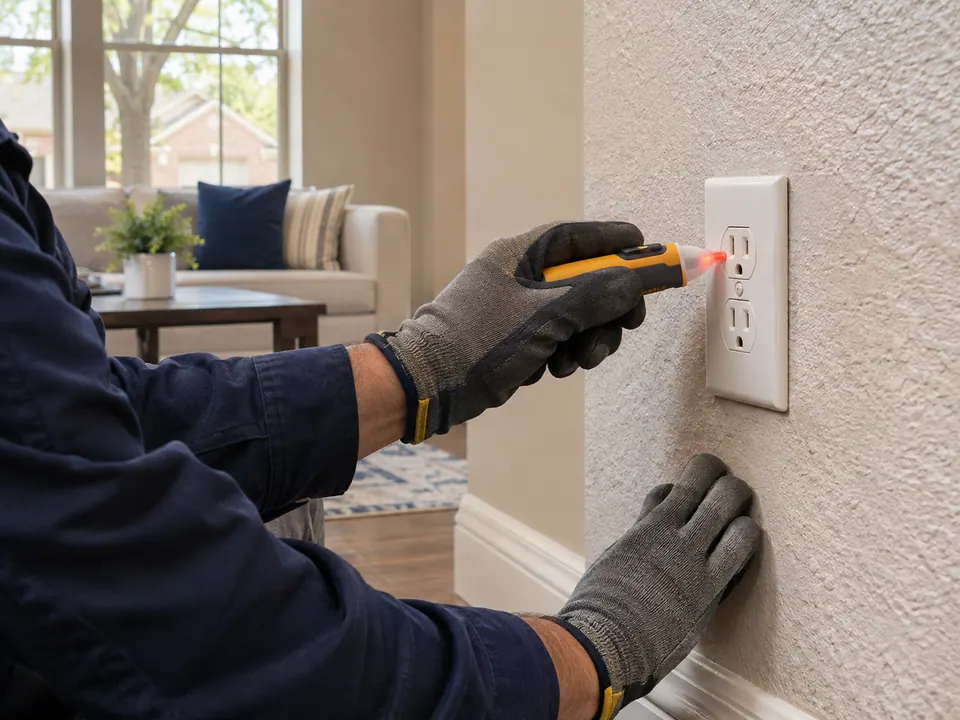
Diagnosis comes first
Replacing the visible receptacle may solve a worn or damaged device, but it will not restore power if the fault is upstream. An electrician can identify the affected circuit, check the protective devices and accessible connections, then determine whether the outlet, its wiring, or another component needs attention.
The pattern matters. One dead outlet, several receptacles in a row, and a whole room without power point to different starting checks. Note what still works and whether the problem began after a particular appliance was plugged in or a breaker tripped.
Problems we assess
These common outlet faults can look similar from the room, but they do not always have the same cause.
A failed receptacle, loose connection, switched outlet, or upstream protective device may be involved. Note whether the failure comes and goes; testing the circuit helps distinguish the cause.
Receptacles downstream from a tripped GFCI or an open connection can lose power together. The first failed point may be outside the room where the problem appears.
Worn internal contacts may no longer grip the plug securely. Stop using a receptacle that will not hold a plug firmly or shows heat damage.
Heat, darkening, buzzing, or a burning smell deserves prompt attention. Leave the outlet unused and report those signs when you call.
A bathroom, garage, kitchen, or outdoor GFCI can trip because of a fault or a failed device. Repeated reset attempts are not a substitute for finding the cause.
One half may be controlled by a wall switch, or the device or its connection may be faulty. The wiring arrangement should be checked before replacing it.
Before the electrician arrives
You do not need to remove a cover or touch wiring to provide useful information. Leave a hot, sparking, or damaged outlet unused.
Try to identify whether one receptacle, several nearby outlets, or lights and appliances on the same circuit stopped working. That pattern helps locate the fault.
Note any visible trip indication and whether a reset has already been attempted. If protection trips again, leave it off and describe what was connected at the time.
A new appliance, water exposure, recent work, or a pop when a light or device was switched on can help narrow the affected part of the circuit.
Repair or a different project?
The goal is to restore a safe, working connection without assuming the outlet face is the whole problem.
A worn, cracked, loose, or heat-damaged device may need replacement after its box and connections are assessed. The wiring and protection must be suitable for the replacement.
If lights and receptacles in several rooms lose power together, tracing a wider electrical fault becomes more important than replacing one outlet. The affected circuit and its source need diagnosis.
An outlet that works but sits in the wrong place is an installation request. Adding one where it is needed involves placement, circuit capacity, and a wiring route rather than repair of a failed device.
How repair starts
Assessment identifies the fault before a replacement or circuit repair is proposed.
Tell us which outlet or outlets are affected, what stopped working, and whether you noticed heat, sound, smell, or a trip.
An electrician checks the device, relevant GFCI or breaker, and accessible connections to locate where power or a safe connection was lost.
Confirm whether the work calls for a receptacle, a connection repair, or further circuit work, along with the proposed price before it begins.
Service areas
Call about a failed receptacle at your home or business in Arlington or another community we serve.
View all service areas →Helpful answers
Find out what the symptoms can mean and when to stop using the affected outlet.
The receptacle, a switch-controlled half, a loose connection, or an upstream GFCI may be involved. A breaker that looks on does not prove every connection on the circuit is intact. An electrician can trace the affected path before deciding what to repair.
They may share a protective device or wiring path. A tripped GFCI, breaker issue, or open connection upstream can affect several receptacles downstream. Note which outlets still work to help locate the first failed point.
Yes. A GFCI receptacle or breaker can protect more than the outlet where its buttons appear. If it trips again or will not reset, leave it alone and have the device and circuit assessed rather than repeatedly resetting it.
No. Poor contact can create heat, and a plug that slips out easily indicates the receptacle is worn or damaged. Stop using it and request an assessment of the device and its connections.
Stop using the affected outlet and keep others away from it. Heat, buzzing, darkening, or a burning smell can indicate a serious electrical problem. Tell the electrician about those signs when you call. If you see smoke or fire, contact emergency services.
Some receptacles are intentionally wired so one half is controlled by a wall switch. A failed device or connection is another possibility. Check whether a nearby switch changes it, then have the wiring assessed if the behavior is new or unreliable.
That depends on the fault. A damaged or worn receptacle usually calls for replacement, while a supply problem may require work at a GFCI, breaker, connection, or wiring run. The cause should be identified before a part is chosen.
Cost depends on whether the problem is confined to the receptacle or requires tracing and repairing an upstream fault. The condition of the box, wiring, and protective device also matters. Describe the symptoms and affected areas so an electrician can assess the scope and provide a price.