
A Breaker Trips Again
The living room or garage loses power each time the breaker is reset. A recurring trip needs the circuit and connected loads checked, even if the breaker appears normal.
Electrical help for a tripping breaker
A breaker that keeps tripping, will not reset, or feels hot needs a careful assessment. World Class Electric, LLC helps Arlington homeowners and businesses find the cause. An electrician checks the breaker and the circuit it protects, then explains whether the right fix is a compatible replacement or another electrical repair. Call with the affected area and what happens when power goes out.
Understand the trip
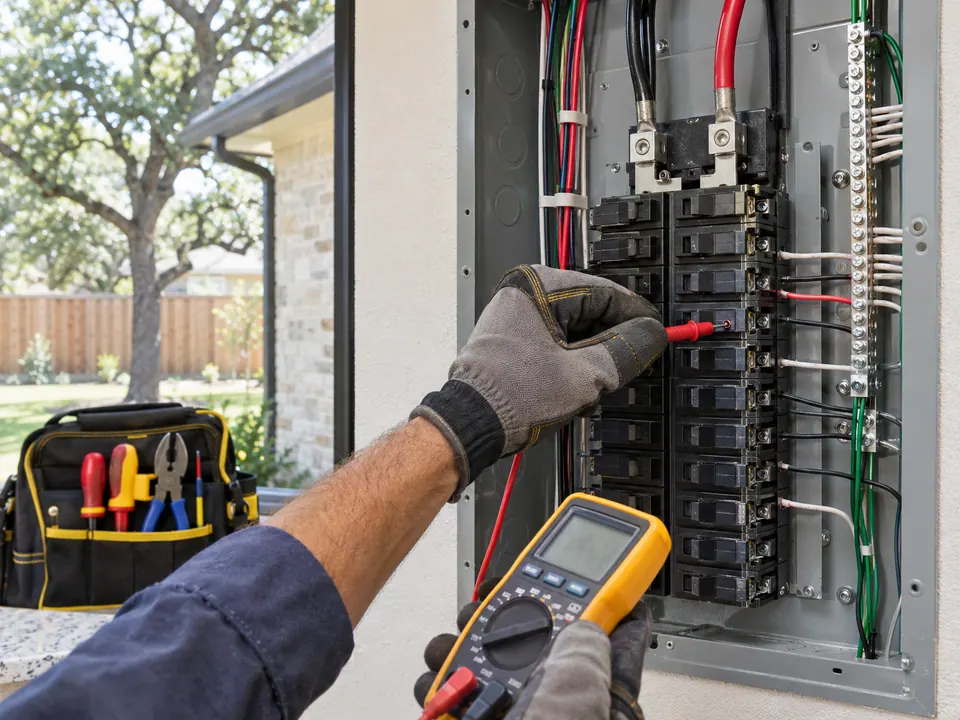
A breaker opens a circuit when it detects a condition it is designed to protect against. Repeated trips may point to an overloaded circuit, a problem with connected equipment or wiring, a ground or arc fault, or a defective breaker. The trip alone cannot identify which one.
Note which rooms or devices lose power and whether the trip follows a particular appliance or switch. That pattern helps an electrician decide what to check first. When several areas lose power without a clear breaker trip, electrical troubleshooting can trace the fault through the affected circuits, outlets, and connections.
A practical next step
Get the breaker and its circuit evaluated before deciding what needs replacement.
Signs to describe
Tell us what you notice. Similar symptoms can have different causes.
The living room or garage loses power each time the breaker is reset. A recurring trip needs the circuit and connected loads checked, even if the breaker appears normal.
A breaker that will not stay on may be responding to a fault still present on the circuit. The electrician checks the cause before considering replacement.
Heat, discoloration, a burning smell, or damage around the breaker or panel warrants prompt professional attention. Avoid using the affected circuit.
One room or a set of outlets may lose power while the rest of the property works. The affected breaker, devices, connections, and wiring may all be relevant.
These breakers add ground-fault or arc-fault protection. A trip can reflect a real problem on the circuit, so changing the breaker without diagnosis may leave the cause in place.
Repair or replace?
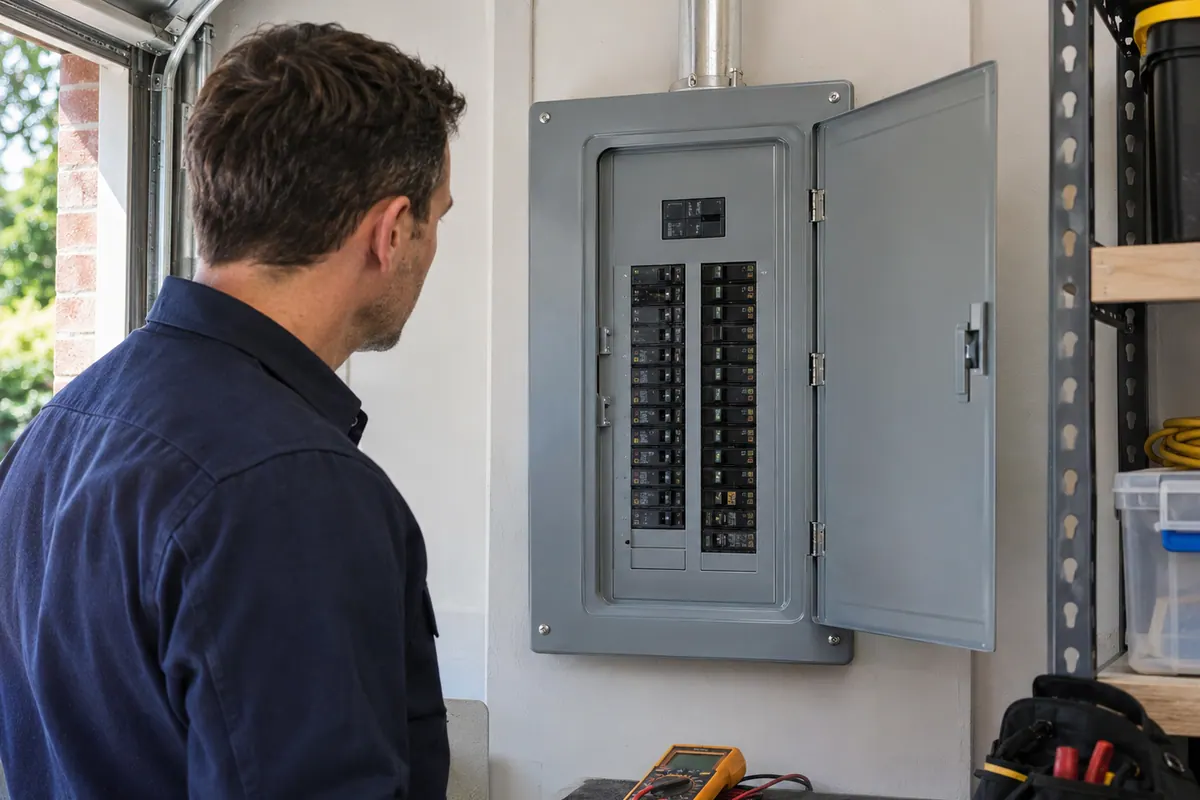
Replace a breaker when assessment shows the breaker itself is defective or unsuitable for the panel and circuit. If it is tripping because of a load, device, wiring fault, or panel damage, a new breaker alone will not fix that underlying problem.
An appliance drawing too much current, a damaged cord, or a wiring fault can cause a protective trip. The electrician identifies what the breaker is responding to before recommending work.
A damaged breaker may need a compatible replacement. Heat, corrosion, or damage beyond one breaker may require electrical panel repair instead.
A replacement must fit the panel and the protected circuit. The amp rating should not simply be increased to stop trips. The electrician also checks whether the circuit uses a standard, GFCI, or AFCI breaker.
Know what protects the circuit
These devices protect against different electrical conditions. The right replacement depends on the existing installation and applicable requirements.
Protect the circuit against excessive current. A trip may involve an overload or a fault, so the cause needs checking before the breaker is replaced.
Add protection against ground faults for the circuit. A GFCI breaker sits in the panel, while a GFCI receptacle sits at an outlet. The electrician checks which device applies to the installation.
Provide arc-fault protection. Repeated trips call for an assessment of the connected equipment and wiring as well as the breaker.
How service starts
A clear description helps the electrician start with the affected circuit.
Tell us which area loses power, when the breaker trips, and whether any appliance, light, or outlet was in use at the time.
An electrician checks the breaker, protected circuit, and relevant connected equipment to find what is causing the trip or power loss.
Discuss the diagnosis, compatible parts or other repairs, and the proposed price before work begins.
Service areas
Call about a tripping or damaged breaker at your home or business in Arlington or the surrounding communities we serve.
View all service areas →Helpful answers
Understand what may be happening before you choose a repair.
A repeated trip means the breaker is responding to a condition or may itself have a problem. Possible causes include too much load, a faulty appliance, damaged wiring, a ground or arc fault, or a defective breaker. An electrician checks the circuit and breaker to identify the cause. Avoid repeatedly resetting it to keep power on.
The fault that caused the trip may still be present, or the breaker may be damaged. A breaker that will not stay on should be assessed along with the devices and wiring on its circuit. Do not force it into place or assume a new breaker is the answer without a diagnosis.
That depends on the cause. If the breaker is defective, a compatible replacement may be appropriate. If it is protecting the circuit from an overload, equipment fault, or wiring problem, that underlying issue needs attention. Heat or damage in the panel may call for panel repair instead.
Price depends on the breaker type, panel compatibility, accessibility, and whether the diagnosis finds other work on the circuit or panel. A standard breaker replacement and repair of a wiring fault are different scopes. Ask for the proposed work and price after the cause has been assessed.
No. A higher amp rating is not a shortcut for repeated trips. The breaker must be selected for the panel and the circuit it protects, including the wiring and connected load. An electrician should determine why it trips and whether the circuit needs a different repair or a properly planned dedicated circuit.
A GFCI breaker responds to ground-fault conditions, while an AFCI breaker responds to certain arcing conditions. Both also function as circuit breakers. The correct type depends on the circuit and applicable requirements. If one trips repeatedly, an electrician should check the circuit before treating the breaker as defective.
Not necessarily. A single defective breaker may be replaceable if the panel is otherwise suitable and a compatible device is available. Damage, corrosion, or overheating in the panel can change the recommendation. A planned panel upgrade is a different decision, based on equipment condition, available capacity, and future loads.
Stop using the affected circuit and call for professional electrical help promptly. If you see smoke or fire, move to safety and contact emergency services. Do not open the panel or keep resetting the breaker. When you call, share where the heat or smell is coming from and whether other areas have lost power.