
Charger Has No Power
A dark display or status light may mean the unit lacks supply power or has an internal fault. Note whether the breaker and other devices on the circuit are affected.
Existing home charger problems
World Class Electric, LLC helps Arlington EV owners investigate a home charger that will not start, stops mid-session, trips a breaker, or reports a grounding error. The message may point to the charger, its cable, the vehicle, or the electrical supply; it does not identify a replacement part by itself. An electrician can assess the charging circuit and connections, then explain whether electrical repair, manufacturer support, or a new unit is the practical next step. Share the charger model and the exact alert when you call.
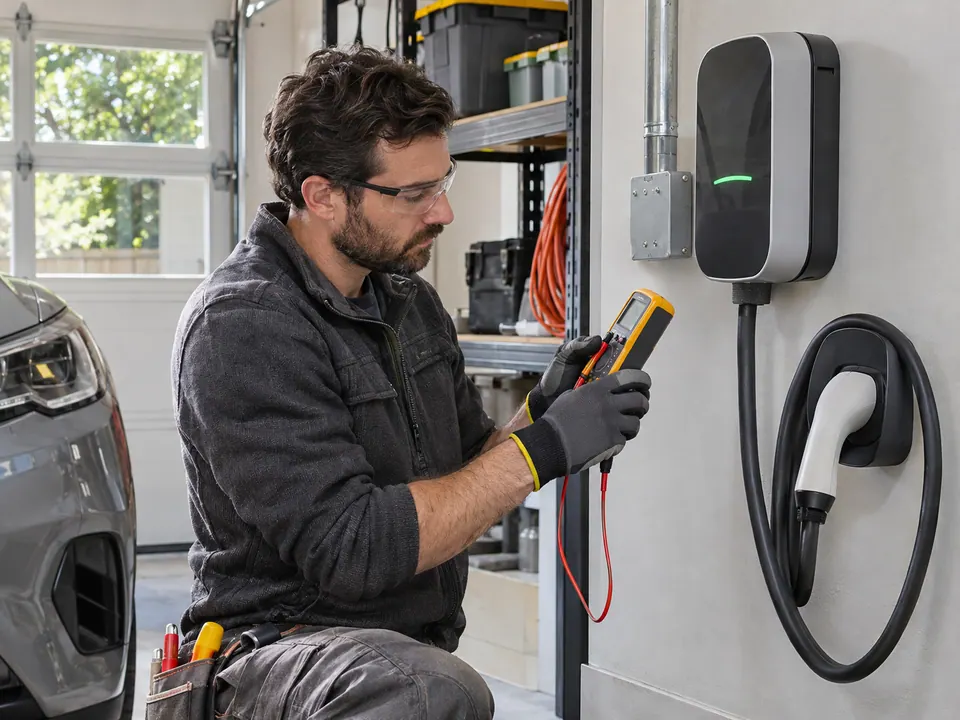
Identify the failing part
A red light, reduced charging speed, or a failed session can have different meanings on different charger models. Start with the product manual's fault description and the vehicle's message. The timing matters too: a charger that is dark before a car connects suggests a different first check from one that stops only after charging begins.
Note whether the charger has power, whether a breaker trips, and whether other garage lights or outlets are affected. If the property also needs help with lighting, outlets, or other electrical work, a local electrician in Arlington, TX can consider the wider system before the wall unit is blamed. These observations help focus the visit without asking you to open a panel or charger enclosure.
Symptoms we investigate
The exact pattern helps distinguish a device alert from a supply or vehicle problem.
A dark display or status light may mean the unit lacks supply power or has an internal fault. Note whether the breaker and other devices on the circuit are affected.
A vehicle or charger may report insufficient ground, ground fault, or a connection error. The circuit, charger, connector, and vehicle all need consideration before a cause is assigned.
A repeated trip may involve the branch circuit, charger, or connected vehicle. Stop repeated resets and have the circuit and equipment assessed.
Reduced output or a session that ends early may relate to a charger setting, heat warning, electrical connection, scheduled charging, or vehicle limit. Record when it happens.
A cracked handle, worn contact, frayed cable, or melted-looking area needs prompt attention. Do not use visibly damaged equipment while repair or replacement options are reviewed.
Loss of app access does not always mean charging has stopped. Compare the vehicle's charging behavior with the app status before treating a network or schedule issue as an electrical failure.
Diagnosis with context
Where the fault may be
Testing the path in order helps avoid replacing a charger for a fault elsewhere.
The breaker, receptacle or hardwired connection, grounding path, and voltage at the equipment may need inspection. A failed supply can leave a healthy charger unable to operate.
The model-specific status light or app code can indicate an internal fault or a protective shutdown. If the circuit tests correctly, manufacturer guidance may determine whether the unit is serviceable.
Check for visible damage or moisture at the handle and charge port without touching damaged contacts. A vehicle alert or failure with only one car can change the likely path of diagnosis.
Charging schedules, a lost Wi-Fi connection, or account settings can make an otherwise powered station appear unavailable. Electrical testing and manufacturer app support solve different kinds of problems.
Useful details before you call
Take a photo of the charger label, status light, and vehicle or app message. Note whether the issue appears immediately or after several minutes, whether it happens every session, and whether another charging location works for the same vehicle. A model number is more useful than a brand name alone because fault codes and supported parts vary.
Do not open the charger or panel to investigate. Stop charging if the plug, cable, outlet, or unit is hot, damaged, sparking, or smells burnt. For a plug-in setup with a visibly damaged or nonworking receptacle, repairing the charging outlet may be part of the solution after the circuit is checked.
Write down the words, blink pattern, or error code shown by the charger and vehicle.
Tell us whether charging never starts, stops under load, or works intermittently.
Have the charger model, vehicle model, and connection type ready if known.
After the cause is clear
A connection, breaker, or receptacle problem may call for electrical repair while the charger remains usable. A damaged cable or internal charger fault depends on model-specific parts and manufacturer support. Replacement becomes reasonable when a safe repair is unavailable or the unit is no longer supported.
Ask what failed, what can be repaired, and whether the existing circuit remains suitable for any replacement unit. A new charger's power setting and connection type cannot be assumed to match the old one.
Correct a confirmed fault in the supplying circuit or connection.
Check warranty, approved parts, and model-specific instructions for a device fault.
Choose equipment that fits the vehicle and the verified electrical supply.
How the work begins
Share the exact symptom so the electrical assessment starts in the right place.
Provide the charger and vehicle models, error text, light pattern, and when the problem occurs.
An electrician assesses the relevant supply, connections, and protective devices, then compares findings with the charger and vehicle information.
Discuss the confirmed electrical repair, manufacturer support need, or replacement option and its scope before work begins.
Service areas
Call about an existing home charger in Arlington or another community we serve.
View all service areas →Helpful answers
Use the exact charger and vehicle messages when asking for help.
Not necessarily. The message may involve the supply grounding path, charger, cable, or vehicle. Stop using equipment that reports a persistent fault and have the electrical connection assessed before replacing the unit.
A trip can have several causes in the circuit or connected equipment. Do not keep resetting a breaker that trips again; an electrician can check the circuit and the charger's requirements.
Its meaning depends on the brand, exact model, and whether the light is solid or blinking. Record the pattern and consult the model's fault guide rather than treating every red light as the same failure.
Yes. A vehicle setting, charge-port issue, or vehicle fault can interrupt charging. Note whether the same vehicle charges elsewhere and whether another compatible vehicle works on this station, if you can check safely.
A protective fault, heat warning, breaker trip, schedule, or vehicle limit may interrupt a session. The timing, error message, and equipment status help narrow what should be tested.
No. Some chargers continue basic charging when Wi-Fi or app access is lost. Compare the vehicle's charging status with the app and the manufacturer's guidance before assuming an electrical failure.
That depends on the charger model and whether an approved replacement cable or component is available. Do not use a cracked, frayed, or overheated cable. Never splice or patch it as a temporary charging solution.
Cost depends on where the fault is and whether the work involves a circuit, outlet, cable, or the charging unit itself. Manufacturer coverage and part availability may also affect the decision. Ask for the diagnosed scope and price before approving repair or replacement.