
Entry and Porch Lights
A wall lantern, ceiling light, or downlight can make the front door and house number easier to see. Mounting location, existing wiring, and weather exposure shape the choice.
Exterior lighting for useful spaces
World Class Electric, LLC helps Arlington homeowners and businesses add lighting to entries, walkways, patios, and landscapes. A path needs light where people step; a patio needs it where people gather; and a motion light needs a useful view of the area it serves. An electrician can review the fixture locations, existing power, weather exposure, and switching before planning the installation. Tell us which outdoor spaces need light and how you want them to work after dark.
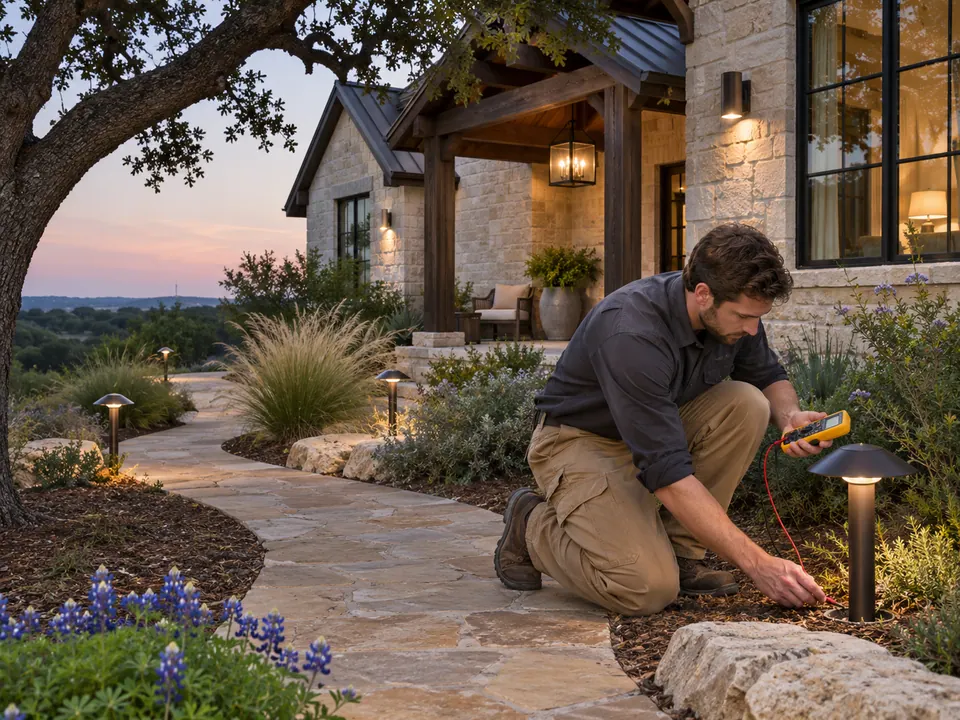
Begin with the purpose
Good outdoor lighting starts with the area you need to see or use, not a row of fixtures chosen in advance. Entry doors, steps, uneven paths, seating areas, and landscape features have different lighting needs. Placement, beam direction, and controls affect whether the light helps without shining where it is not wanted.
Share a photo of the space and mark where a fixture or outlet already exists. If the project also requires new power for a patio, outbuilding, or other outdoor equipment, a local Arlington electrician can assess the broader electrical supply before the lighting locations are set. That early review helps keep the lighting plan connected to the way the property will be used.
A practical starting point
Plan the electrical work
The answer changes the wiring and mounting plan. A photo can help explain the project, but an on-site assessment determines what the location requires.
A new porch or wall light may use the existing electrical point if the box, support, wiring, and location suit the product. The fixture must also be appropriate for the exposure it will face.
A new path, patio, or security light needs a supply route and suitable mounting point. The electrician reviews access, existing circuits, and whether a low-voltage landscape system or another installation method fits the project.
If the goal is to make an installed light work again, diagnosis of the existing outdoor light can identify whether its fixture, control, connection, or supply failed before a new installation is planned.
Make the light useful
Start with the door, walkway, work area, or feature you want to see. Aim the light at that task and consider what neighbors and drivers will see from other angles. More fixtures or brighter lamps are not always the better choice.
Outdoor equipment must suit its mounting location and exposure to rain or moisture. The available circuit, wiring route, and any transformer or control also affect the plan. Timers, motion sensors, and dusk-to-dawn controls serve different habits; tell us when you want the lights on and off.
Identify steps, entries, seating, parking, or landscape features rather than choosing fixture count first.
Existing exterior points, panel location, and access through the property affect the wiring route.
Choose manual switching, a schedule, darkness sensing, or motion response based on daily use.
How the project begins
Know the area and the outcome you want before settling on fixture models.
Tell us where light is needed, what exists now, and whether you prefer constant, scheduled, or motion-activated lighting.
An electrician assesses placement, mounting, exposure, power, and controls. New locations may need a wiring route or a different fixture type.
Review the scope and price before work begins. After installation, check that each light and control behaves as intended.
Service areas
Call about exterior lighting for a home or business in Arlington or another community we serve.
View all service areas →Helpful answers
These details help you plan a useful installation and describe the work when you call.
Often, but the new location needs a suitable electrical supply, wiring route, mounting point, and exterior-rated equipment. Access and the property layout determine what is practical.
Light should reveal steps, turns, and changes in the walking surface without creating glare. The best fixture type and spacing depend on the path width, nearby features, and available power.
Yes, a compatible motion-sensing fixture or control can turn a light on when movement is detected. Placement and sensor settings matter so it responds to the area you want to cover.
A timer follows a schedule; a photocell responds to daylight. Some arrangements combine controls. Choose based on when the light is actually needed and whether you want to adjust a schedule.
They may be suitable for paths and accents when the layout supports a transformer and wiring route. An electrician can compare that approach with other outdoor lighting methods for the specific space.
Share the model and intended mounting location before installation. The electrician can check its instructions, exposure rating, power needs, and compatibility with the planned control and mounting point.
Cost depends on the number and type of lights, whether power already exists, the wiring route, mounting access, controls, and any work needed at the circuit. A fixture swap and a new landscape lighting layout have different scopes. Ask for the proposed work and price after assessment.
A failed installed light should be diagnosed before a replacement is chosen. The problem may be in its lamp, fixture, sensor, timer, connection, or supply. Tell us whether other outdoor lights are affected too.