
One Ceiling Light Stopped Working
If nearby lights still work, the lamp, socket, fixture connection, or its control may be at fault. Replacing the fixture before checking the supply can leave the same problem in place.
Help for lights that are not working
World Class Electric, LLC helps Arlington homeowners and businesses with lights that flicker, dim, go out, or stop responding to a timer or control. A failed ceiling fixture, a group of weak recessed lights, and a backyard light that no longer turns on can have different causes. An electrician can check the lamp, fixture, control, and electrical supply to find the fault before recommending a repair or replacement. Tell us which lights are affected and what changed.
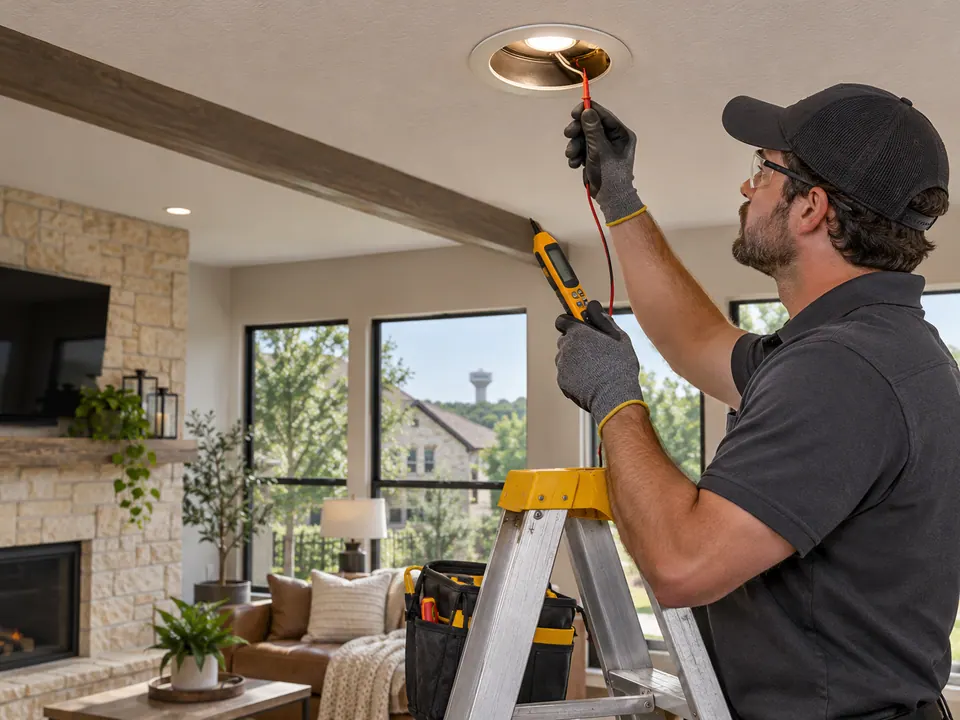
Find the cause first
A light that fails is not always a bad fixture. The lamp, socket, LED driver, dimmer, timer, wiring connection, or supply circuit may be involved. The first useful distinction is whether one light is affected, several lights on the same control are affected, or the problem extends beyond the lighting.
Note whether the light flickers at a certain dimmer setting, goes out after warming up, or stopped working after a bulb change. If several rooms dim together or outlets also lose power, an electrician in Arlington, TX can check the wider circuit before anyone replaces a single fixture. Those details help direct the diagnosis to the right starting point.
Problems we can assess
Similar symptoms can come from different faults. An inspection determines which component needs attention.
If nearby lights still work, the lamp, socket, fixture connection, or its control may be at fault. Replacing the fixture before checking the supply can leave the same problem in place.
One recessed light that fades or flashes may point to its lamp, integrated LED unit, driver, or connection. If an entire row behaves the same way, the shared control or circuit also needs attention.
Flickering or buzzing at low settings can involve an incompatible dimmer and LED combination, but it can also have another electrical cause. The installed products and wiring should be checked before a control is changed.
An intermittent fixture may fail after warming up or when a connection is disturbed. Note when it happens and whether other devices lose power at the same time; repeated operation does not make the fault safe to ignore.
A porch or backyard light that misses its scheduled cycle may have a timer, photocell, motion sensor, or fixture problem. The control settings and power supply help narrow down the cause.
An installed exterior fixture can fail because of its lamp, weather-exposed connections, control, or supply. The electrician checks equipment suitability and condition before recommending a repair or replacement.
A practical first call
Understand the pattern
Where the problem appears can change the work needed. Tell us which fixtures, switches, rooms, and outlets are affected.
A single failed light points first to its lamp, fixture components, connection, and control. The electrician can confirm whether power reaches it before deciding what to replace.
When a group fails or flickers together, the shared dimmer, timer, switching, or circuit becomes more relevant than any one lamp. A damaged wall control may call for light switch repair after the fault is identified.
Power loss beyond the lighting points to a broader electrical issue. Repeated breaker trips, a pop, or a burning smell should be reported when you call; stop using affected equipment if you notice heat, smoke, or sparking.
Make the right recommendation
A repair may involve a failed lamp, socket, driver, control, or connection. Replacement can make more sense when an integrated fixture has failed, parts are unavailable, or the existing unit is damaged. The right choice depends on the product and the electrical condition, not just the visible symptom.
Bring the fixture model or a clear photo if available. Explain whether the light is hardwired, uses replaceable lamps, or has an integrated LED. An electrician can check the supply and components, then discuss the work and price before it begins.
Look for visible damage, corrosion, failed sockets, or a nonworking LED unit.
Confirm whether the switch, dimmer, sensor, or timer operates the light correctly.
Find out whether the circuit delivers power as expected before buying a new fixture.
How service begins
A clear description of what the lights do makes the first assessment more useful.
Tell us which lights are affected, when the symptom began, and whether a bulb, dimmer, timer, or fixture was recently changed.
An electrician checks the relevant fixture, control, connections, and supply to distinguish a local lighting fault from a circuit problem.
Discuss the finding, repair or replacement options, and price before work begins. The affected light and its controls can be tested afterward.
Service areas
Call about a malfunctioning light at your home or business in Arlington or another community we serve.
View all service areas →Helpful answers
These answers can help you describe the problem and decide when to call.
The lamp, socket, fixture, connection, or its switch may be responsible. The electrician can check whether the fixture receives power before recommending a part or full replacement.
A weak lamp, failing LED component, incompatible dimmer, loose connection, or supply issue can produce similar symptoms. Note whether one downlight or the entire group is affected; that pattern helps identify what to inspect.
Sometimes. The answer depends on the failed component, fixture design, parts availability, and overall condition. A damaged or integrated fixture may be more practical to replace after the electrical supply has been checked.
The LED lamp or fixture may not work well with the installed dimmer, but a wiring or equipment problem is also possible. Share both product models if you have them so compatibility and connections can be assessed.
A timer or sensor can be checked along with the connected outdoor light and its power supply. The finding determines whether the control needs adjustment, repair, or replacement.
Stop using the affected light and do not repeatedly reset a breaker. If you notice smoke, heat, or a burning smell, move away from the hazard and seek emergency help. Describe the sound and which other lights or outlets lost power when you call.
Cost depends on the fault, fixture type and accessibility, parts needed, and whether the problem is in a control or circuit. A single lamp or control issue and a fault affecting several rooms require different work. Ask for the proposed scope and price after diagnosis.
Not if the light stopped working unexpectedly and the cause is unknown. A new fixture will not solve a failed switch or supply problem. Describe the symptom first, then choose a replacement if the inspection shows the fixture itself needs one.