
Replace an Existing Ceiling Fan
A replacement may use the same location if the box and support are fan rated and in good condition. The new fan still needs the correct mounting hardware, connections, and controls.
New and replacement ceiling fans
World Class Electric, LLC helps Arlington homeowners and businesses install or replace ceiling fans. Changing an old fan, putting a fan where a light hangs now, and adding one to a room without a ceiling electrical point are different jobs. An electrician can check the mounting support, wiring, ceiling height, and controls before installing the selected fan. Tell us where the fan will go, what is there now, and whether the new model includes a light or remote.
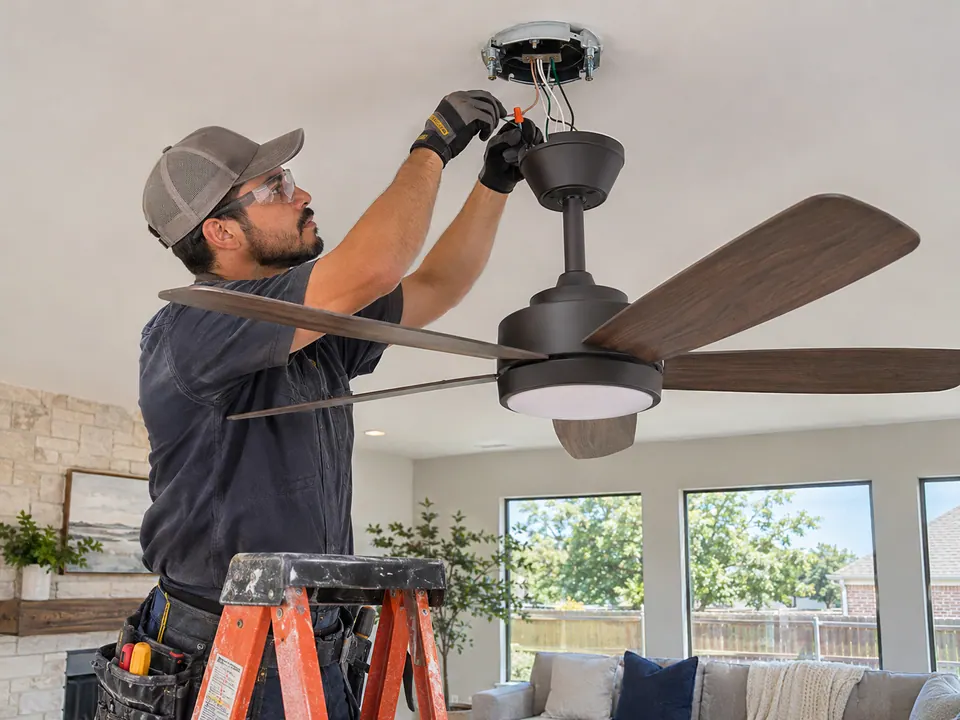
Start at the ceiling
A fan needs support designed for its weight and movement. A box that held a light should not be assumed suitable for a ceiling fan. The electrician checks the box and its attachment, the supply and switching, and the fan instructions before deciding what the installation requires.
Have the fan model and a photo of the ceiling location ready if you have them. Note whether there is an old fan, a light, or no electrical point, plus any high or sloped ceiling. If the fan is part of a room remodel with other electrical changes, an electrician serving Arlington can assess the wider wiring and control plan together. That context helps avoid treating a new-location project like a simple fan swap.
A practical installation plan
Know what is already there
Those three starting points lead to different decisions about support, wiring, and controls.
The box may already be suitable, but its rating and attachment still need checking. A new fan may also use a different control or mounting method.
The light's box may not carry a fan's weight and movement. A fan-rated box or brace may be needed, and the existing switch wiring may limit separate fan and light control.
A new location calls for a mounting point, supply route, and control plan. Ceiling access and the room layout affect how the wiring can reach it.
A clicking or wobbling fan may have a mounting, balance, control, or motor problem. Checking the installed fan can establish whether a repair makes more sense than replacing it.
Details to settle before mounting
The fan should be supported by a box and building structure suitable for the selected model. Room size, blade clearance, ceiling height, and any slope affect fan size and mounting hardware. Follow the chosen fan's instructions rather than assuming that the same downrod or bracket works everywhere.
Decide how you want to operate the fan and its light. Separate wall controls may require different wiring from a single switch or a remote receiver. For a patio, the fan's damp or wet rating must match how much moisture or rain can reach it. An indoor-only fan is not a substitute for an outdoor-rated product.
Confirm that the ceiling box and its attachment are identified for fan use.
Measure the space, ceiling height, and distance to nearby walls or obstacles.
Choose how the fan speed and light should respond at the wall or remote.
How the work begins
Share the fan model and the ceiling situation so the installation can be assessed accurately.
Tell us whether the ceiling has an old fan, a light, or no electrical point. Mention the ceiling height, patio exposure, and fan model.
An electrician reviews the box, mounting structure, power, and control options before confirming what needs to be installed.
Agree on the scope and price before installation. The fan, light, and controls can be tested together once it is mounted.
Service areas
Call about a new or replacement fan for a home or business in Arlington or another community we serve.
View all service areas →Helpful answers
Know what to check before buying a fan or asking for installation.
Often, but the existing light box may not be rated to support a fan. An electrician checks the box, its attachment, wiring, and the fan's mounting instructions before making the change.
That may be possible with a new wiring route, fan-rated mounting point, and suitable control. Access above the ceiling and the room's construction affect the scope.
It is an outlet box marked for supporting a ceiling fan. The box and its attachment must suit the fan's weight and movement. A box intended only for a light should not be assumed suitable.
Yes, keep its model and installation instructions available. Share the room dimensions, ceiling height, existing fixture, and any patio exposure so the product can be checked for the location.
Often, but the available wiring and selected fan determine the options. Separate wall controls may need a different wiring arrangement; some models use a compatible remote receiver instead.
The fan must be rated for the moisture it may encounter. A protected covered patio may call for a damp-rated model, while direct rain exposure calls for a wet-rated model. Check the exact location and product instructions before installation.
Price depends on whether a fan-rated box and wiring already exist, the ceiling height and access, the fan model, and any new controls or electrical point needed. Replacing a supported fan and adding one to a new location are different jobs. Ask for a price based on the actual ceiling conditions.
Not automatically. A sound or wobble may involve the mounting, blade balance, controls, or motor. Stop using a fan that appears loose or scrapes, and have it assessed before choosing repair or replacement.