
Replace an Existing Exhaust Fan
An older unit may be noisy, stopped, or ineffective. The new model must suit the opening and existing vent arrangement, and its electrical connection and controls need checking.
Bathroom ventilation fan projects
World Class Electric, LLC helps Arlington homeowners with the electrical work for a new or replacement bathroom exhaust fan. An existing fan may need a compatible unit and connection, while a bathroom without one needs a new power and control plan. Fan and light combinations, timers, humidity controls, and heater units add different electrical requirements. Tell us whether a fan and outdoor vent path already exist, and what you want the new unit to do.
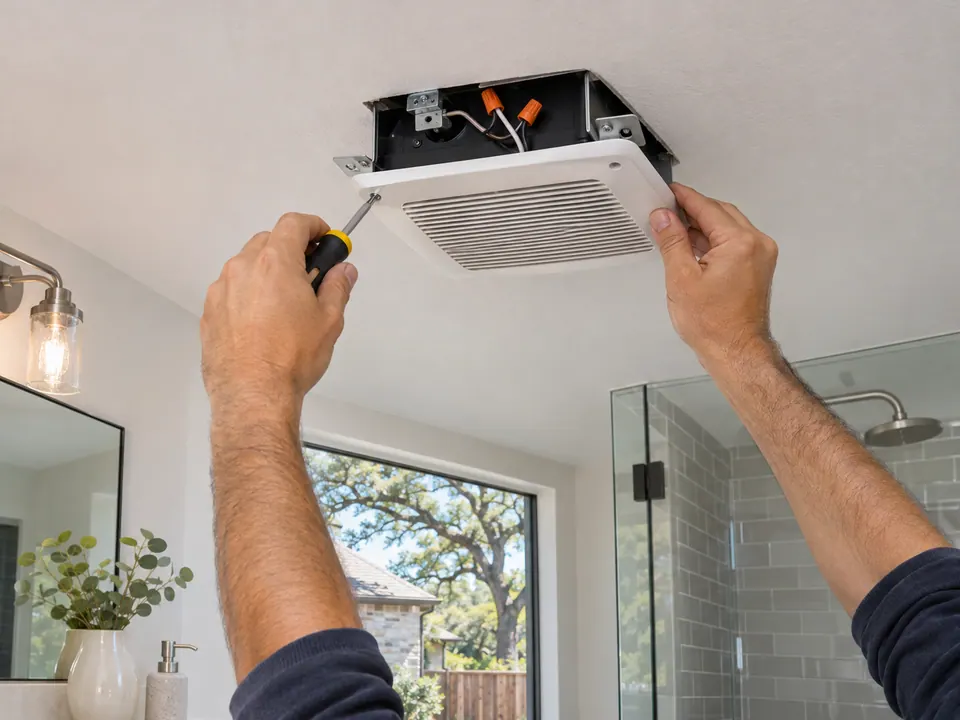
Start with the existing setup
Removing moisture and odors depends on more than a working motor. The fan needs suitable power and controls, and its exhaust must have a proper route outdoors. For a replacement, the existing opening, housing, duct connection, and switch arrangement affect which model will fit and what electrical changes are needed.
Have a photo of the current ceiling and switch ready if possible. Tell us whether the room has an old fan, only a light, or no ceiling opening. If you are also moving lights, outlets, or switches in a bathroom remodel, a residential electrician serving Arlington can plan those changes with the fan controls as one project. A first-time fan may also need ducting and an exterior vent beyond the electrical portion.
A clear installation plan
The key site condition
A ceiling opening alone does not show where the air goes.
The housing, duct connection, and exterior termination should be checked for the replacement model. Electrical work may be straightforward when the new fan fits and the existing supply and control are suitable.
Ask where the exhaust terminates. A fan that vents into an attic or ceiling void does not solve the bathroom's moisture problem. The complete project may need ventilation work as well as electrical connection.
A new fan requires a ceiling location, wiring, switch plan, and a route outdoors. Duct and exterior-vent work must be included in the overall scope before the project is treated as a simple electrical swap.
Before choosing a model
The bathroom size, ceiling opening, duct path, and selected fan's instructions affect which unit is appropriate. A larger or quieter model may not fit the old housing or existing duct without other work. Ask about the complete setup rather than judging the fan only by its advertised airflow.
Decide whether the fan should use the light switch, a separate switch, a timer, or a humidity sensor. For a heater combination, the existing circuit and required load need a closer review. If a fan runs but only its wall control has failed, repairing the bathroom fan switch may address the problem without replacing the whole unit.
Share the old unit's model and a photo of the ceiling grille if available.
Confirm whether the fan exhausts outdoors and where the duct terminates.
Explain whether you want a separate switch, timer, or automatic humidity response.
How the project begins
Knowing what is already in the ceiling makes the first conversation more useful.
Tell us about the current fan or light, switch, ceiling access, and any known outdoor vent. Share the new model if you have chosen one.
An electrician checks the electrical connection and controls. The full project must also account for the fan housing, duct, and exterior termination.
Review the work and price before installation. Once the electrical portion is complete, the fan and its controls can be tested together.
Service areas
Call about a bathroom ventilation fan at a home in Arlington or another community we serve.
View all service areas →Helpful answers
Understand what affects a replacement or first-time bathroom fan project.
Yes, the electrical connection and controls are electrician work. The replacement unit also needs to fit the opening and connect to a suitable vent path. Share the old model and current setup when calling.
A new fan may be possible, but it needs power, a control, an installation location, and an exhaust route outdoors. The ceiling and exterior access determine the complete project scope.
Yes. Sending humid air into an attic or ceiling void does not provide proper outdoor exhaust. If you do not know where the existing duct ends, mention that before a replacement is planned.
Often, but the existing wires, new fan model, and available switch space determine the options. A separate control may require additional wiring.
A compatible timer or humidity control may be an option. The fan instructions, existing switch wiring, and chosen control need to be checked together.
Do not assume it can use the same electrical connection. A heater has its own load requirements, so the model and circuit capacity must be assessed before installation.
The fan may be undersized, worn, obstructed, or connected to a poor vent route. Installing a new unit without checking the duct and outdoor termination may leave the moisture problem unresolved.
Price depends on whether an existing fan and outdoor duct can be reused, the new model, ceiling access, wiring, controls, and any ventilation work needed. Ask for a scope based on the actual room rather than a simple fan-swap estimate.